
Home Work Salvage yard websites
Websites for salvage yards and used auto parts sellers.
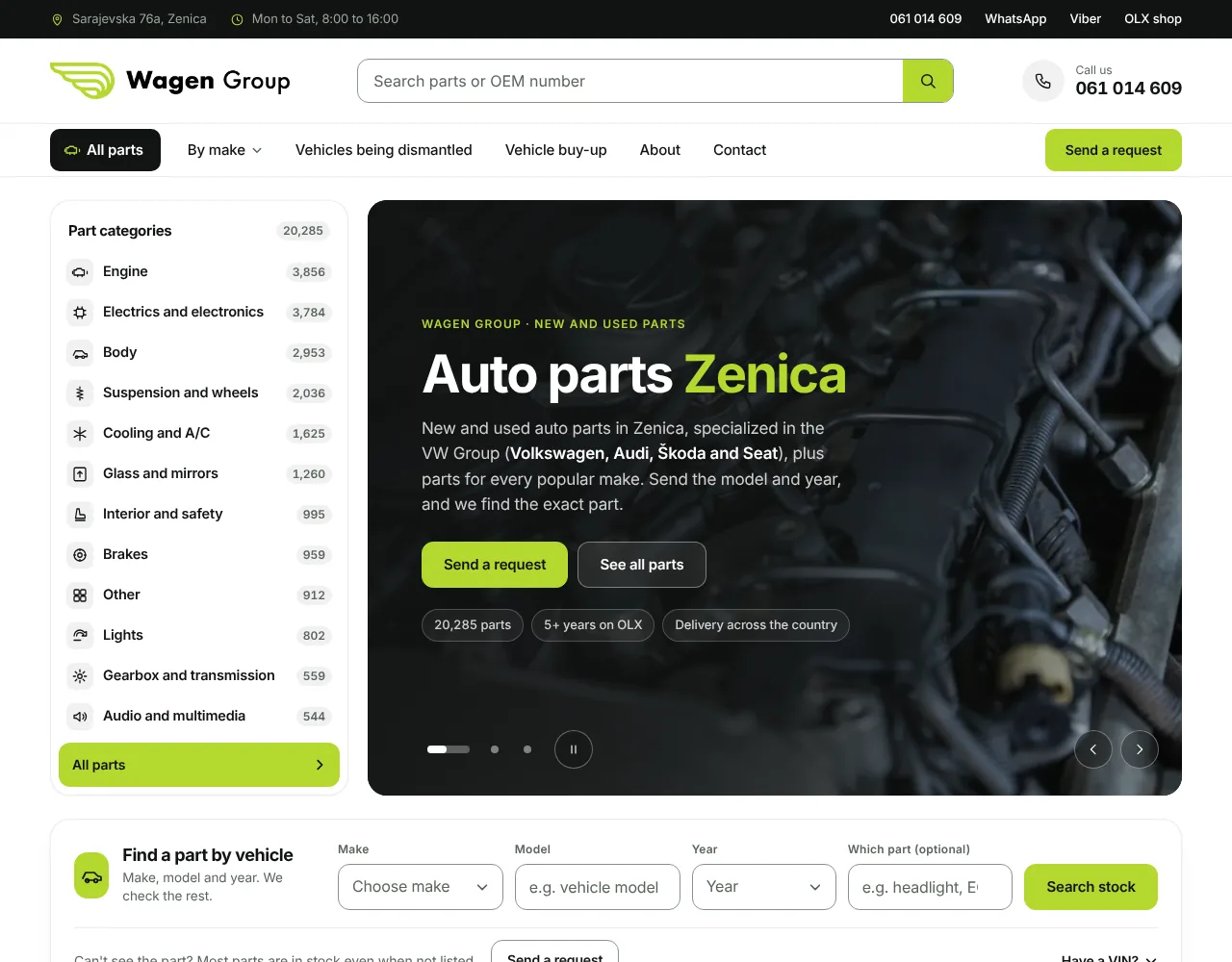
Every part you list becomes its own page that buyers can find on Google. I built a parts store with more than 20,000 items that updates itself from the marketplace where the owner already sells, so the website keeps up with the yard.
Marketplace sync
Automatic
New listings appear on the site by themselves
Part pages, each with its own address
20,286
Counted from the live sitemap, November 2026
A parts store that fills itself. The owner lists a part on the marketplace. The website adds it, with its own page, price and photos.
- Part pages
- 20,286
- Car model pages
- 148
- Part categories
- 141
- Car makes
- 27
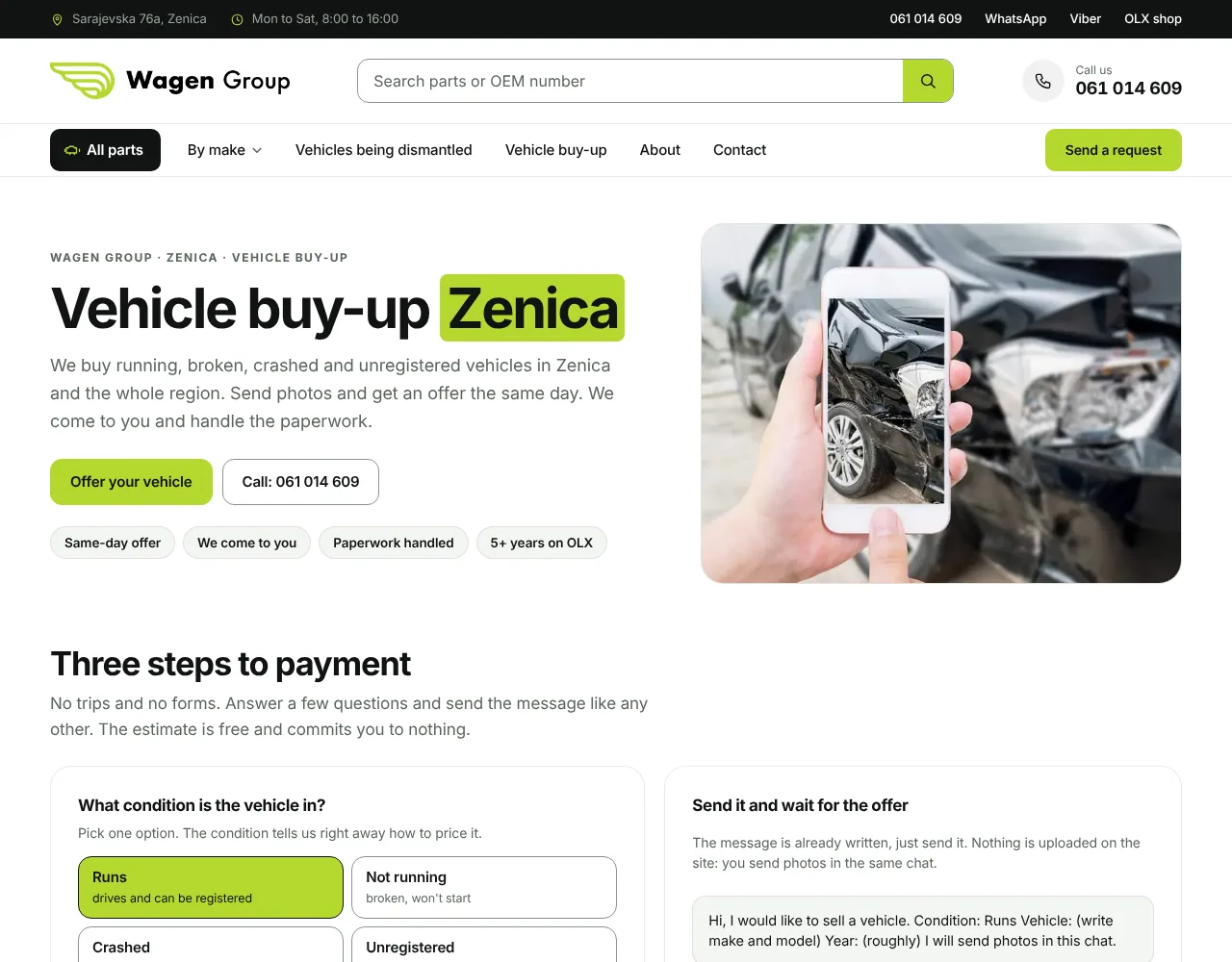
Counted from the live sitemaps of wagengroup.ba, November 2026. I designed and built the whole store: brand, website, marketplace sync, buy-up page and local search.
Visit wagengroup.ba (opens in a new tab)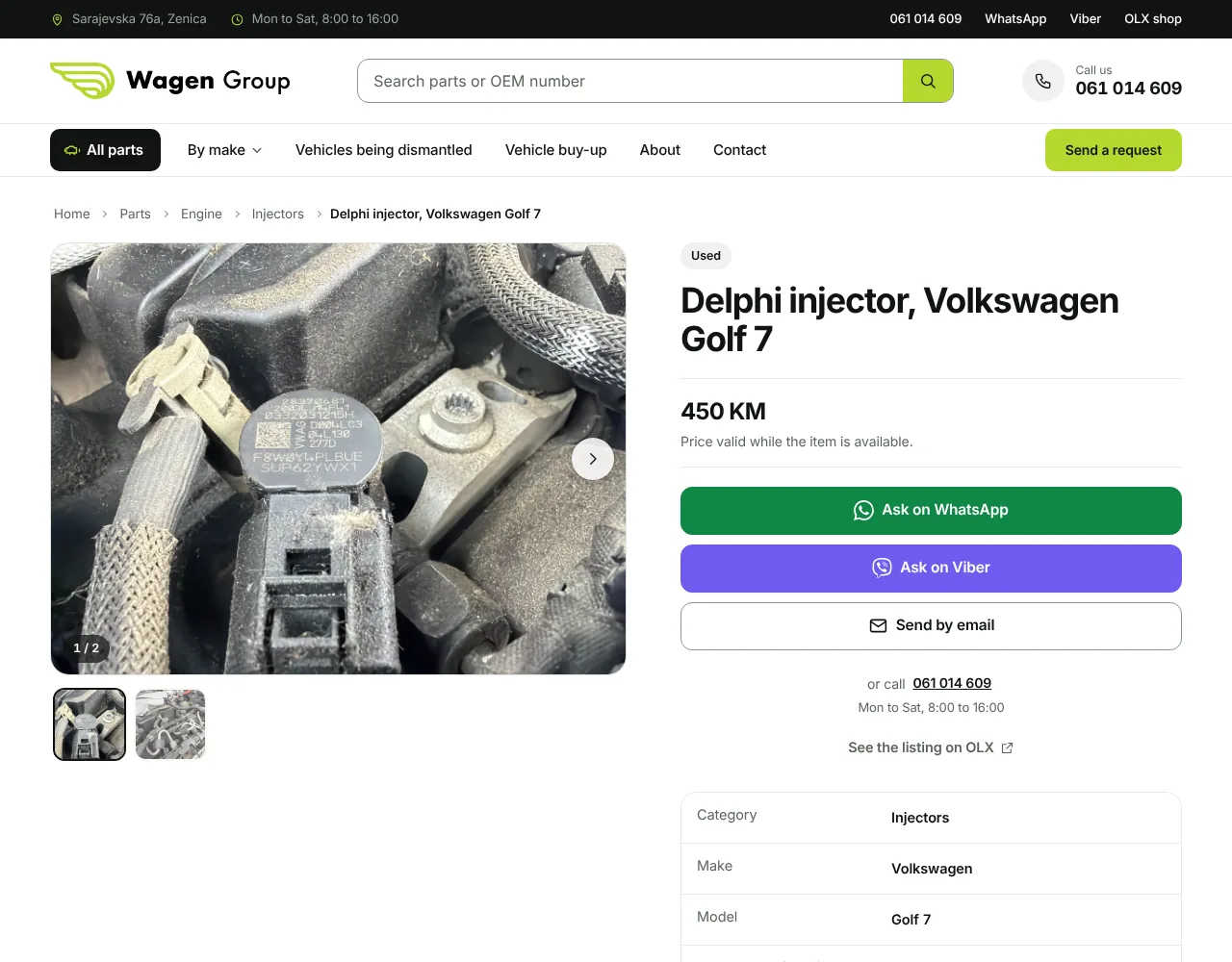
How it works. One listing, two places to sell. The owner keeps working the same way as before.
The owner lists a part once
On OLX, the marketplace where the business already sells, the same way as always. No second system to learn.
The website adds it by itself
Title, price, photos, category and car model come across automatically.
Every part gets its own page
A clear title like "Delphi injector, Volkswagen Golf 7", the price, a WhatsApp and Viber button, and product data Google can read.
Buyers find the exact part
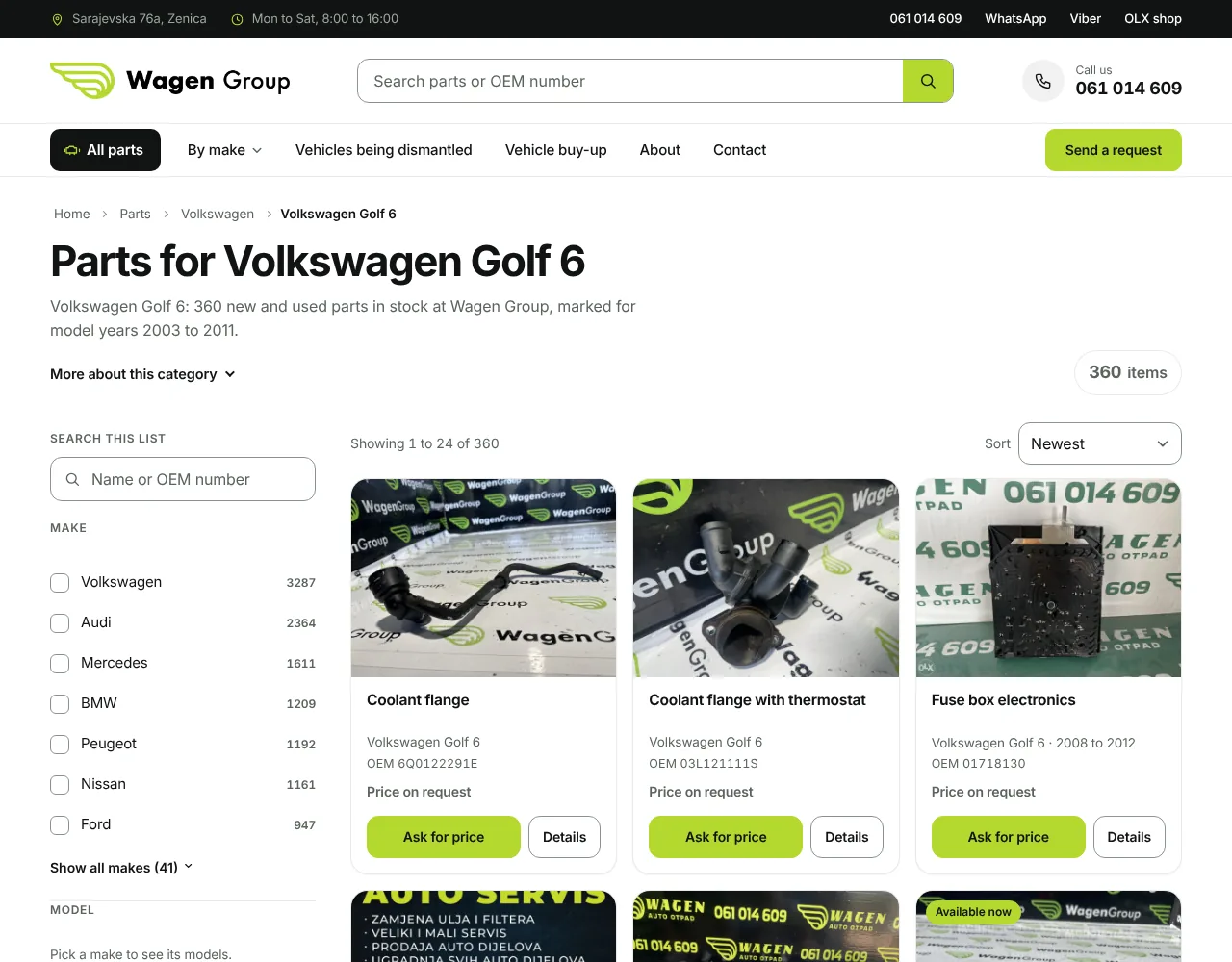
Search by part name or OEM number, or by make, model and year. Model pages group everything for one car.
Built for people who buy parts. Mechanics and drivers know what they need. The store gets them there in a few taps.
Search by name or OEM number
Mechanics type the number from the old part and land on the right one.
Find a part by car
Make, model and year filters, plus a page for every model with all its parts.
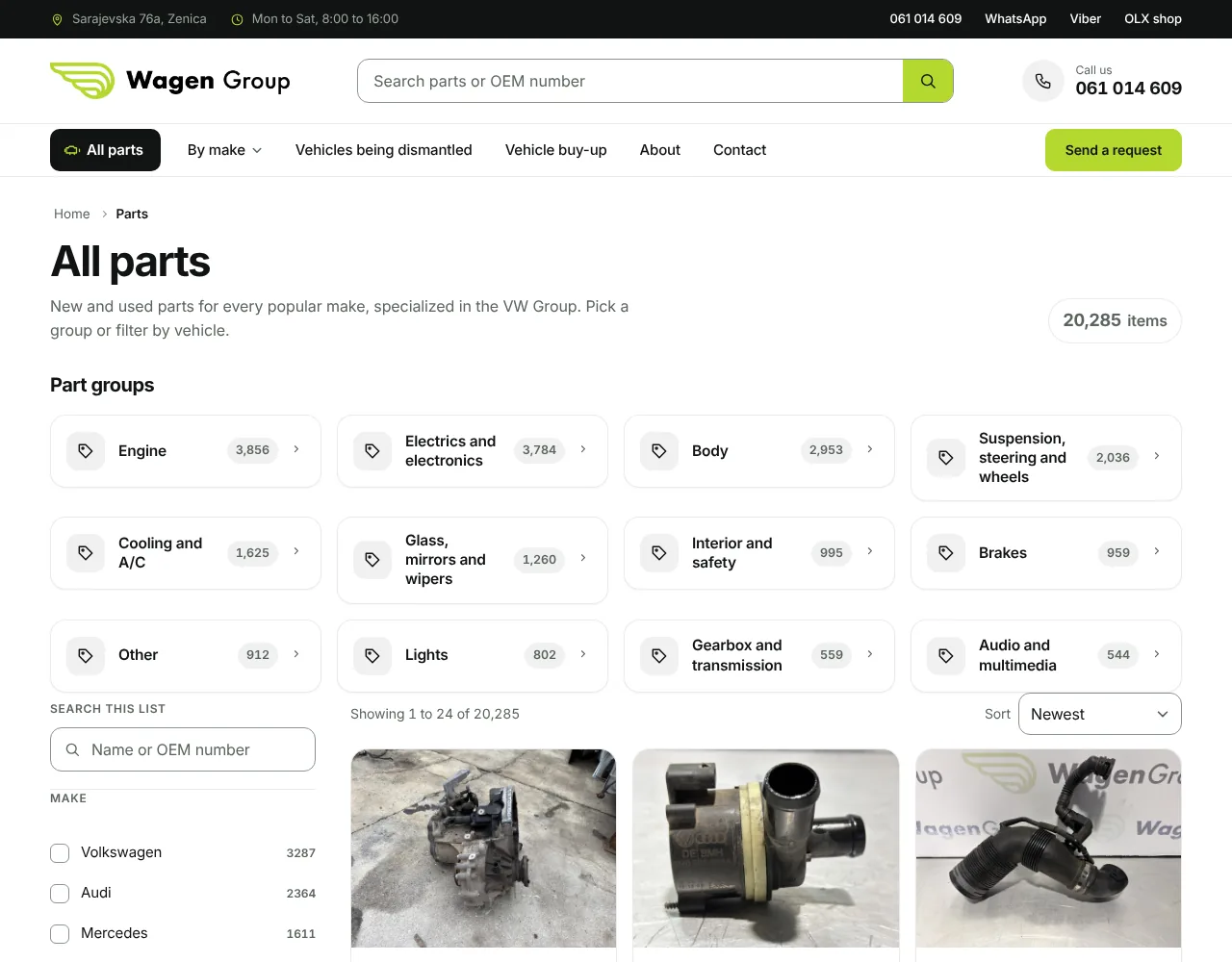
141 categories, counted live
From engines to window regulators, each with a live count, so buyers see the stock at a glance.
Ask on WhatsApp or Viber
One tap from every part page. The message already names the part and links to it.
Vehicle buy-up page
A step-by-step form where sellers describe the car and send photos for an offer.
Product data for Google
Product, breadcrumb and store markup on every page, so search results can show the part and the store.
Inside the store. The live site is in Bosnian, for local buyers. These screens are the live pages, translated to English for this case study.
Start from the inventory you already have. No retyping thousands of parts. The site reads them from where they live today.
Marketplace listings
OLX in the store above. eBay Motors and other marketplaces can feed a site the same way when they offer a feed or an API.
Yard management software
If your inventory system can export your parts, the site can read that export. I check what yours offers before I quote.
A spreadsheet
Many yards start here. A clean sheet of parts, prices and photos is enough to build the first version of the store.
Questions yard owners ask me.
Plain answers, before you write a word.
Can my website use the inventory I already have?
Often, yes. The store above updates itself from OLX listings. Marketplaces, yard software and spreadsheets can work the same way when they offer a feed, an export or an API. I check yours before I quote.
Does every part really get its own page?
Yes. On the store above, 20,286 parts each have their own address, title and price, and 148 car models have a page with all of their parts. That is what lets one exact part show up in a search.
How do buyers order or ask about a part?
Your choice. On the store above they ask on WhatsApp or Viber with the part already named in the message. You can also take calls, texts or card payments online.
Which platform do you build on?
Big, synced catalogs are a custom build on WordPress, so any WordPress developer can work on it later. Smaller shops can be WooCommerce or Shopify. I recommend one in writing before you pay anything.
Who owns the website?
You do. Your domain, your hosting, your logins. If you ever leave, you keep all of it.
What does it cost?
It depends on the number of parts and how they reach the site. You get a fixed price in writing before any work starts. See the plans.